Tampilkan postingan dengan label London Film Festival. Tampilkan semua postingan

Kamis, 28 Oktober 2010

LFF 2010: Zero Hours Remain

David from Victim of the Time with one last report from the 54th BFI London Film Festival.

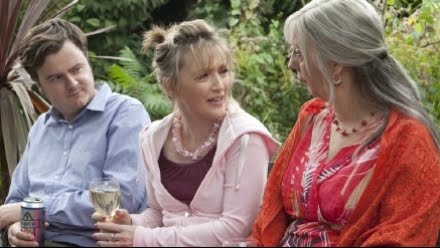
Craig gave you a packed wrap-up earlier today, but I couldn't let you go without getting in another word myself. I caught near to 50 films during the past month (give or take a couple I, er, nodded off during), and I'm happy to say there were an abundance of highs and a general lack of lows - maybe I just chose well, or maybe the programmers did. My standout film remains Kelly Reichardt's menacing Meek's Cutoff (review), while the festival practically brimmed over with stunning female performances, from Michelle Williams' two-hander in Meek's and Blue Valentine (capsule), to Jeong-hee Lee's damaged optimism in Poetry (Nat's review), to Lesley Manville's jittering sorrow in Another Year (capsule). Huge thanks to Nathaniel for hosting Craig and I, huge thanks to the festival for putting on such a great show, and huge thanks to you for reading.

For my final post, let's stick with the positivity, since the year's closing film proved a surprising package from a director I usually dislike...

127 Hours may give you a headache, but Aron Rolston had to hack his arm off, so maybe you I should stop complaining. Danny Boyle rather pre-empts the inevitable intensity of witnessing someone detach their arm with a blunt penknife by assaulting your senses from the very first moment; it’s all split screens, fast edits, impossible pans from inside kitchen units, close ups of taps dripping, and so forth. This is all rather disorientating and it barely lets up, but the film is enclosed in some vague, meaningless allusion to the speed of modern life with shots of commuters that resemble Koyaanisqatsi, and so the headrush of Boyle’s direction is a very straightforward interpretation of living in Rolston’s world. Once he gets trapped in the crevice, these stylisations barrage instead into his mind, continually taking us on flights of delirious imagination and memory.


Trapped in a limited space, this approach cracks open the film to a freewheeling, if no less intense than you’d expect, experience. The ‘realer’ scenes are kept vital by a dynamic use of sound to express the physicality of the situation. 127 Hours is a rather aggressive experience, but even if the schizophrenia of the visuals makes you put your head between your legs, the generous sense of irony and humour the script exudes, and that the playful James Franco expresses so engagingly, keep the film alive. Though maybe cover your eyes when he removes his contacts. (B+)

Coming-of-age dramas are ten-a-penny, yet the festival threw up a fair share of superbly imagined gems of that specificity. South Africa’s Oscar entrant this year is Life, Above All, where the adolescent Chanda deals with a useless, drunk stepfather, an ill mother, a rebellious friend and the judgmental gazes of her entire neighbourhood. Khomotso Manyaka is a vibrant, perceptive anchor for the film, never characterising Chanda either as burdened by or martyring herself, and importantly maintaining a sense of innocence and childlike fun in her gait and attitude. The script’s heavy emphasis on social judgment is intriguingly endorsed by the intensity of the style in these sequences, hammering home the point to such an extent that it takes on an extra layer of the camera’s judgment; it doesn’t merely observe, but judges the judgers. But specially, Life, Above All is a nuanced, powerful and engaging drama that eschews the ‘poverty porn’ that most African exports seem to engage in, without severing itself from the depiction of the nationhood that inspired that stunted idea in the first place. (A-)


More literally coming of age is Anna (Clara Augarde), centre of Katell Quillevere’s intriguing Love Like Poison. It initially seems set up as a reticent period story, in the 1.33 aspect ratio and dangerously cosy country settings. Very rapidly, though, we see that this is a modern story, with a handily unjudgmental and open attitude. Familial dynamics are skewed – Anna’s mother ashamedly confesses to being jealous of her daughter’s burgeoning sexuality; and Anna reveals herself to two very different males with markedly different intentions – and their tangle with the essence of religion is a set of thematics dealt with by the script on an unpredictable, deeply complex level. More essentially, Quillevere’s film has an innate sense of what the realisation of sexuality is like, and the repercussions it has on the people closest to Anna prove amusing, surprising, depressing, and memorable. (B+)

LFF 2010: five final festival films to wrap up with...

Craig here from Dark Eye Socket with my LFF wrap-up.

As of tonight the BFI London Film Festival is done for another year. It's been a stellar year all told, if the surplus of reports are to be believed. And I'd willingly add a further approving nod to the list. I didn't manage to see everything I wanted (juggling festival times and dates with travel arrangements is an art – one that's open to fateful intervention...and multiple tube delays), but what I saw was on the whole a bumper crop. Roll on next year, I say. Here are five previous reviews, selected from the films I saw:  Uncle Boonmee, A Screaming Man, Winter Vacation, Rare Exports and What I Love the Most. And below are five final mini reviews of a few festival highlights.

Thomas Vinterberg introduced his new film, Submarino, in a cheeky fashion: “if all goes well, you’ll be depressed at the end of the film. Enjoy yourselves!” It was no happy time sure, but it was an enthralling film, despite its determinedly grim subject matter. It follows two brothers’ hard, poverty-stricken lives in contemporary Copenhagen; a family tragedy as kids has left them scarred and emotionally unable to cope with adult existence. Hope is hard to grasp, but not too far away; redemption comes at a cost but may just stop dead the cycle of despair plaguing one or both of the brothers. The characters' direness isn’t forced or over baked and sympathy is well-earned. Lead actors Jakob Cedergren and Peter Plaugborg are excellent as, respectively, the older and younger siblings. Vinterberg’s humanistic approach is thoroughly rewarding and the tautness of the script ensures we become embroiled in the brothers’ plights. It’s strangely an easy film to like, but not always pleasant to watch. B-

 Submarino

Abel, the second directorial effort by actor Diego Luna, was a complete contrast to Submarino (I saw them consecutively). The story of a boy, the titular Abel, who returns home from a stay at a psychiatric hospital to resume living with his mother and siblings – only to assume the role of patriarch of the house, brought on by his father’s disappearance years earlier. The family go along with the ruse in the hope that it aids the boy’s recovery. It’s an amusing, sweet-natured look at how families are truly peculiar to themselves more so than to others. It also questions the role of the father in modern Mexican life and makes more than a few choice and aptly conveyed criticisms of male-dominated hierarchies.


Though it plays all this with pleasant abandon, Luna handles the few slightly troubling darker moments with able care. If the ending seemed a bit easily arrived at, it was made up for by the wonderful photography and easygoing performances, not least a cracking turn by young Christopher Ruiz-Esparza as Abel. C

Abel

Two excellent documentaries at the LFF this year were, for my money, two of the fest's best. The first, Journey’s End (La Belle visite) from French-Canadian director Jean-François Caissy, looks at the day-to-day lives of the residents of a Quebec retirement home for the elderly – the L'Auberge des Caps – over five seasons. Situated between a frosty ocean view and a busy Highway, the home, refurbished from an abandoned motel, is a building once made for passing visitors, but now houses folks in the later stages of their lives. Caissy unobtrusively documents random events with warm assurance: dear old gals getting their hair done, the comings and goings of deliverymen, birthday celebrations, personal prayer time and even the home’s resident dog, who frequently scarpers the vast, long corridors. All the community is shown with great thoughtfulness, and interest in their lives is duly maintained through Caissy’s sure-handed control of his material. The inherent tranquillity of it all is thrown into sharp relief by the inevitable idea of finality aroused by the title. It was a joy to spend time with these people. B

Journey's End

The second documentary to wow me was Frederick Wiseman’s Boxing Gym, now playing in US theaters. Wiseman is as much a film artist as any fiction filmmaker, and is often (rightly) held up as such alongside many a fellow documentarian (Chris Marker and the Maysles bros, for instance), especially for his no talking heads, no descriptive onscreen captions and, ultimately, no fuss approach. As ever, his mastery of the form is present and apparent. The titular gym in Austin, Texas is the focus of Wiseman’s elegant and measured gaze: its owner Richard Lord and various members – including lawyers, students, young mothers, doctors, soldiers – train, chat and generally box happily away whenever their often busy lives permit. All the while Wiseman, with his signature visual dexterity, acutely captures key moments and exchanges which reach far beyond the activity at hand to reveal insights into contemporary America. The sounds and aural rhytms of the gym are particularly notable: the noise of fast punches to speed bags, the constant buzz from the training timer chart, the white noise of friendly banter in the background. It’s a visually splendid film, too: light falling on the gym floor, frenetic, dance-like close-ups of nimble-footed boxers and still shots of the city in bright daylight all display Wiseman’s skill with crisp composition. But the telling snapshots of individual gym members resonate most. I was interested in each person’s history, the fleeting ins and outs of their lives, and could’ve happily spent many more hours with them at Lord's gym. Wiseman gets every aspect spot on. A

Boxing Gym

Finally, Sofia Coppola’s new film Somewhere was, at once, a pleasant surprise and a film seemingly set on autopilot. It’s lovely to look at but it feels rather too much like happy stasis. The first half hour is largely a series of beautifully photographed scenes simply woven together, featuring a strung-out Hollywood actor played by Stephen Dorff frittering his time away lounging with pole dancers and film world flakes in between routine appointments. That’s all well and good until he has to take charge of his estranged daughter (Elle Fanning) and attempt to emotionally re-engage with his real self.

Dazed, cool-around-the-edges drifters are common currency for Coppola, and the film doesnt tread anywhere fresh. It’s fairly easy to predict where Somewhere will end up. The film meanders nicely enough – Sofia does love those lazy days – but it loses some of its early finesse on later scenes which don’t go anywhere or say anything particularly interesting. Coppola is obviously criticising the Hollywood machine here, but she’s also clearly enamoured with it. Is she maybe too close to really have something coruscating to say. She’s a direct product of it, which makes several of her soft attacks come off as slightly too precious. It’s not ivanssxtc (though I’m actually quite glad about that), but it does effectively pinpoint some of the less glamorous actorish tasks with effective wit and clarity. (An 'old-man make-up' test sitting is both deliberately dull and languorously creepy, and my favourite moment in the whole film – it subtly speaks volumes about the sometimes tedious nature of stardom in one acute slow zoom.)

Somewhere

Somewhere has the most relaxed, laid back atmosphere of any film I’ve seen in 2010 so far, save for perhaps Greenberg, and is a refreshing and escapist diversion for a globe still in economic crisis (though is an indulgent tale about a privileged, self-examining A-lister quite what the world desperately needs right now?). Dorff and Fanning are very good and Harris Savides’ photography (more L.A. kinship with Greenberg) is some of the year’s best. But, to be honest, Coppola is coasting, however blissful the ride. C-

My personal top five from the LFF were: 1. Boxing Gym, 2. A Screaming Man, 3. Journey's End, 4. Submarino, 5. Our Life

Senin, 25 Oktober 2010

LFF 2010: Northern Lights, Black Swans

Dave from Victim of the Time, reporting from the 54th BFI London Film Festival.

We're winding down now. Today's gala screening, the sparky, perceptive The Kids Are All Right, is old news on American shores, so it's a good thing that I've taken so long to ponder over today's films. Today's theme might be... don't expect too much. You'll only get hurt.

Darren Aronofsky’s films consume. They consume the characters, slowly more obsessed with a singular goal or self-destructive impulse, but they consume the audience too. His last film, The Wrestler, was, despite its emotional intensity, less stylistically immersive than is typical of him. We are, in more ways than one, back to ‘normal’ with Black Swan, which simply can’t resist overpowering you with the contrasting black and white thematics of Swan Lake. Any other colour scheme would seem nonsensical, but Aronofsky doesn’t merely prescribe to the ballet’s bald imagery. The whole film seems to mimic the necessarily overdramatic, telegraphed stylisation of the whole artform; the escalating nightmarishness of Nina’s (Natalie Portman) fixations are pitched to the rafters, defiantly relishing the kind of flourishes of red and flashes of madness that Powell & Pressburger would be proud of.

It’s a fine balance, though, and the trappings of imitating such a florid style are easy to fall through even as it delivers vivid, scorching imagery. As a result, it often feels as though it’s in service of an increasingly flimsy set of dynamics. Nina is, physically speaking, a huge step forward for Portman, but as a character to inhabit, she’s reduced to an alarmingly simple ‘coming-of-age’ narrative: a realisation of sexuality, a rebellion, and a descent into madness that, since it is telegraphed right from the off, she is never defined apart from. Confusing, and possibly reductive, suggestions about sexuality (and particularly lesbianism) rear their head, and, coupled with the similarly basic friction between oppressive mother and stunted daughter, Black Swan leaves a slightly bitter taste in the mind at points from the sheer abundance of cliché.

If I sound like I’m being overwhelming negative, it’s merely because my expectations were far higher than any film deserves. The viscerality of the Black Swan experience is such that it’s not difficult to commend, and indeed recommend, and it doesn’t entirely deny Portman the chance to, er, spread her wings. But, ultimately, it feels like a step back for Aronofsky, a triumph of style over substance, and even if the style is slightly magnificent, it’s still a niggling disappointment. (B)

I spent a lot of time sitting watching Aurora, and most of it was spent trying to find the greatness in it. I knew it had to be there somewhere; after all, Cristi Puiu’s previous feature, The Death of Mr. Lazarescu, was a majestic, darkly ironic masterstroke, so there had to be at least a hint of it here somewhere. Finally, as the film approached its end, the rather restless audience around me seemed to find some appeal, chuckling away at the film’s sudden change of tone, and I gave up. There is good in Aurora, but not only is it never great, the goodness is drowned. The film’s intriguing treatment of violence as an event barely more notable than an exchange of money or visiting your parents’ house seems to make sense of the extraordinary running time, but the slowness of the building character study never justifies this length. Puiu’s favouring of long shots, with diegetic sound covering dialogue, seem gratuitously inscrutable rather than fascinating, and though the closer shots are alert and responsive, the lethargy of the film is overwhelming. As the film gathers pace and events are felt a bit more keenly, Aurora seems headed to a meaningful apex, but it torpedoes itself with a finale of absurdity within its realist aesthetic, with the sardonic, humourous social commentary suddenly laid on so obviously it’s as if we’re being buried beneath it. As Puiu introduced the screening, he seemed to acknowledge the wearing length, but it seems he couldn’t resist. Depth, Cristi, doesn’t necessarily require length. (C)

It’s unlikely, no, that a film would name itself after something so intriguing and then barely engage with it? For the soap-opera dynamics of the half of Patagonia that actually takes place in Patagonia don’t have any need to be there at all, although I doubt they’d be much more engaging in California or Siberia than they are here. Rather curiously sheathed in half, with two plots that are cleanly unrelated, the film swerves between Patagonia and Wales without much rhyme or reason. There isn’t much sense of Patagonia as a place distinct from any of the rest of South America, except that the characters – two of whom are visitors – speak in Welsh. Showing the disconnect that should likely be the point of the film, the characters in Wales speak in Spanish, though this plot is played much more heavily for the cultural tension. As the soap-opera dynamics of infidelity and a tired coming-of-age plot crowd the film and Wales is inevitably depicted as a rosy, pastoral landscape, any deeper angles that have been vaguely suggested are shunted aside. The brief hints of something more specific that we are given make the film’s overall disinterest even more maddening – there are stories here being ignored, snubbed for ones that have probably been written during a deep sleep. (C-) [edited from full review]

Still left on the LFF docket are Sofia Coppola's Venice champion Somewhere, and closing night film 127 Hours, which Nathaniel just left word on. If you're so inclined, take a look at the screening log on my sidebar and let me know if there's any film you're just desperate to hear my thoughts on, and I'll slip it into my final post in a few days.

Minggu, 24 Oktober 2010

LFF 2010: What I Love the Most

Craig reporting from the London Film Festival.

Argentinian film editor Delfina Castagnino makes her directorial feature debut with What I Love the Most / Lo que más quiero, a slight but thoughtfully quiet film full of long takes and extended pauses. The slim plot follows Pilar, who has recently lost her father, visiting her friend Maria, who is absconding from her boyfriend. The two spend their days by nearby lakes, at gigs or on the beach, idling away the time. Pilar ties up her father’s business loose ends and Maria meets a local guy (Esteban Lamothe) who takes her mind off her relationship and the friends begin to drift apart.   


What I Love is a cleanly directed, well-composed film. Each scene is clinically precise in its framing, though often deliberately askew – actors awkwardly shot from just below waist-height, tree-lined landscapes partially obscure parts of the film frame. Most shots outlast their naturally assumed endpoints to further mine seemingly pointless instances of idle banter or connection between leads Maria Villar and Pilar Gamboa.


It feels very much like a hazy-lazy variant of the recent-ish Slow Cinema trend – familiar from Castagnino’s sometime collaborator Lisandro Alonso, and Carlos Reygadas, Antonio Campas etc – but with a foregrounded central female friendship (Celine and Julie Go Floating, perhaps?) Or maybe it’s a film after Eric Rohmer’s heart? But imagine, if you will, Sofia Coppola on holiday and on tranquilisers while remaking Vera Chytilová's Daisies to come close to what Castagnino achieves here. She does draw a pair of natural, unaffected performances from the two leads, but at times the film bordered on the exceedingly wispy, as if all that extended emptiness might just blow away on a vapid, late summer wind. Castagnino’s previous employ seems to have been largely neglected for her debut – once she regains her editor’s touch, and finds a way to better substantiate her themes, a second feature might just be a minor gem. D+

 What I Love the Most is showing at the LFF on Sunday 24th and Wednesday 27th October

Sabtu, 23 Oktober 2010

LFF 2010: Rare Exports: A Christmas Tale

Like Winter Vacation (reviewed yesterday and also showing today), more snowy desolation abounds in Almari Helander’s debut film Rare Exports: A Christmas Tale. But this time the setting is a much more grim (bordering on Grimm) and fable-like Finland (bordering on Lapland). There are 24 days to go until Christmas, and high on a mountain a mysterious company called Subzero Inc. are drilling deep, deep down; they discover something, or is it someone, encased in ice. All the local townsfolk are told is that they are to be very very good. A knowing farm boy (Onni Tommila) and his father (Jorma Tommila) latch onto the shady goings-on and decide to investigate further...


It’s a Christmas film for people who hate Christmas: a tale very much about the festive period, but via the quite possibly warped imagination of a Scrooge-like misanthrope. This isn’t necessarily a bad thing. It’s a kid’s film, essentially, although this is debatable: it uneasily sits as outright family entertainment, but skimps on the potential gore it occasionally teases the viewer with (some judicious cutting occurs at crucial points). There’s fun to be had, but intermittently; the narrative mid-section does drag somewhat. Some moments during the build-up to the tense finale are inspired, however, and far more crafty and well-plotted than I initially expected.

Rare Exports exists in a strange place somewhere between a Tim Burton-esque seasonal romp and a middling horror concept stitched onto a yuletide yarn. Not as good as other quasi-kid-flicks like Joe Dante’s recent The Hole or Takashi Miike’s The Great Yokai War for instilling a light terror into your tykes, but worth seeing for its weird way with tall tales. It's decked in all the festive filmic trimmings, but worn in an oh-so-wrong fashion. One thing’s for sure: you won’t want to meet Santa’s Little Helpers after seeing this film. C

Rare Exports: A Christmas Tale is at the LFF on Saturday 23rd & Tuesday 26th October

Jumat, 22 Oktober 2010

LFF 2010: Winter Vacation

Craig here with more from the LFF 2010


Winter Vacation (Han jia), the acclaimed new film from writer-poet Li Hongqi, arrives at the LFF with prizes from both the Seoul and Locarno film festivals. It languorously tracks the existence of a community of mostly-related residents, chiefly a gang of teens awaiting their return to school,  during the last days of a particularly desolate and weather-soured holiday in a Chinese housing complex. It’s visually chilly, but, despite the intriguing barrage of listlessly austere long takes, its tone is markedly light – but deceptively, drably so (yet it still manages to arouse pertinent issues about contemporary China with sly craft). We’re in the kind of film territory usually dominated by the likes of Aki Kaurismäki and Jim Jarmusch – although neither of those bastions of the brazenly bizarre could have shaped as film as dry and droll as this.


The film is loosely structured as a series of interconnected vignettes: a grandfather and grandson verbally spar in a front room; a couple get a divorce; a vegetable market opens to a few frugally-minded customers; a group of youths squabble and loaf around on discarded sofas or stand comically inert amid the bleak industrial surroundings. Humorous banter is frequent, and is on the whole very funny. These exchanges and the lengthy silences between them create some inspired moments of comic interaction. It’s also beautifully edited by Li: he’s very much the auteur on the film, and he shows considerable directorial style and a great knack for pace. Also worth mention is the film’s alluring, off-kilter soundtrack (courtesy of Zuoxiao Zuzhou and The Top Floor Circus): onscreen noises, both diegetic and non-, and odd acapella voices-off enhance the strange, plaintive rhythm of Li’s direction. Winter Vacation is a minor treat – not solely for those with acquired arthouse tastes – to seek out if and when it gets a theatrical release. B

Winter Vacation is at the LFF on Friday 22nd & Saturday 23rd October

Kamis, 21 Oktober 2010

LFF 2010: And It Hurts With Every... Cannon

David from Victim of the Time, reporting from the 54th BFI London Film Festival.

I've been engrossed in this festival for so long now, it already feels like it's winding down; in fact, there's another week to go, with Danny Boyle's 127 Hours the closing night gala next Thursday evening. Perhaps my feeling comes from the fact that my most anticipated film is just around the corner: yes, I too fell under the spell of the Black Swan trailer, and it hits my eyeballs tomorrow. I'm at fever pitch. Today, though, we visit Italia and Quebec, but not before a British perennial delivers once again...


Lesley Manville.

I realise I have a tendency to waffle, so I thought I’d get straight to the point.

I had my problems with Another Year, but, as you’ve heard (and heard, and heard), Lesley Manville is absolutely superb in it. I’d heard that too, but it still didn’t prepare me for the density and devastation mustered by Manville in this character. Manville’s Mary is so magnificently imagined that, despite Leigh’s insistence in the post-screening Q&A that what you see is what was shot, and nothing more, there is the strong suspicion that the film shifted during its realisation to centralise on her. (Echoed by this review – I didn’t set out to focus it so immediately, but it felt honest to do so.)

Perhaps it's reductive to talk solely of Manville. The rest of the cast, from the connecting contentedness of Jim Broadbent and Ruth Sheen to the chirpy Karina Fernandez, give assured performances just the same, and surely only boost Manville’s power through Leigh’s famous workshopping process. The cinematography expressively, if rather obviously, differentiates the seasons the film shifts through. The editing is extremely deft within the restraints of Leigh’s improvisational approach, notably giving a sparky energy to scenes like Broadbent and Sheen’s first meeting with their son’s new girlfriend that contrast with the more sober, gentler feel of much of the film. But I can’t escape that it is Manville, her mousey, skittish walk, her nervous, misdirected laughter and her sad, defeated glances that are what struck me most heavily, and what continue to live mostly strong in my head. (B+)

If only he wasn’t gay! That seems to be the central lamentation of Ferzan Ozpetek’s dunderheadly jaunty Loose Cannons, which doesn’t just have one gay son of a traditional Italian pasta-making family to pretend to support; it has two! Oh yes; before Tomasso (Riccardo Scamarcio) can make his shocking announcement, his brother Antonio taps his glass and is promptly thrown out, leaving Tomasso to run the business and suffer suggestions he should get it on with the business partner’s daughter Alba. Of course, with its longing musical montages of the pair drinking, eating and laughing together, you could be forgiven for thinking the film is even more desperate for the heterosexual harmony than Tomasso’s oddball family are – even when Tomasso’s boyfriend Marco and their camp friends crash the… well, you can hardly call it a party. Framed with a seemingly irrelevant flashback device involving the wise, accepting grandmother, the unexpectedly poignant finale almost redeems things by not tying up every loose end in a neat little farfalle, but it can’t erase the tiresome, laboured schematics of what precedes it. (C-)


I confess. I have a weakness for young, attractive French people giving themselves over entirely to their lustful urges. Xavier Dolan himself is a young and attractive Canadian person, but he’s from Quebec, and I do believe that’s included in Subsection 1B of my confession. After his vaunted J’ai tue ma mere, Dolan again directs himself in Les amours imaginaires (feel free to explain the disastrous English title, Heartbeats). Dolan’s style boldly cribs from Wong Kar-wai – they may not be accompanied by In the Mood for Love’s striking musical theme, but you can almost see a pot of noodles swinging from the hand as we follow a posterior in slow-motion down the street. Dolan doesn’t merely copy but adapts the techniques he apes, sexualising the characters in saturated single-colour sex scenes; but there’s also a sense of irony and pity in the fierce emphasis on the desperation of the two friends both in lust with the same man. Dolan consumes you in sensuality and focuses you on the mistrustful dynamics of love, so that while you might not match the lust for the particular figure, you lust for this mood in general. It isn’t about liking these characters – the sneering ending makes that clear – but about identifying with how low these familiar feelings have made them, and can, have, and will make you. (B) [edited from full review]

Rabu, 20 Oktober 2010

LFF 2010: A Screaming Man

Craig here, continuing a look at films showing at the 54th BFI London Film Festival.

I much admired Chad filmmaker Mahamat-Saleh Haroun's Daratt/Dry Season from 2007 (it took the #4 spot in my year-end list for that year), and he’s triumphed again with his fourth feature, A Screaming Man/Un homme qui crie. Made in the same refined and frank vein as Daratt, this new film follows Adam (Youssouf Djaoro), a pool cleaner and former swimming champion who works at an exclusive N'Djamena hotel with the assistance of his son, Abdel (Diouc Koma). After a job reshuffle Adam loses his job to Abdel; he sinks into depression fuelled by anger and humiliation, and so takes unexpected action. His situation worsens, just as civil war engulfs the country and rebel armies infiltrate the area.


Much of the film’s drama is underplayed. Haroun’s camera focuses on Adam in a curious, contemplative manner, observing with deftness the way his livelihood is slowly and slyly wrenched from him. Events major and minor are directed with crisp elegance, ensuring the plot never strays into falsity despite the tinge of melodrama inherent in it. One crucial shot, detailing a troubling decision Adam makes halfway in, tells us everything we need to know in a single, slow zoom into Adam’s face as he silently wallows in his demotion. Work is life for him; his job a necessity and cherished position, however lowly, which still holds for him the shine of his former swimming glories.

Djaoro (who also gave a fine performance in Daratt) conveys regret and selfishness with natural ease. That we care about him despite his permanently-furrowed demeanour and questionable ethics comes down to his strong turn. Music is used sparingly, and feels loaded with sombre emotion when it cuts in; it disrupts key moments unexpectedly to underline pertinent visual points. The photography (by Laurent Brunet) boldly highlights areas of respite within dim home interiors as much as it luxuriates in the expansive splendour of the hotel poolside. A Screaming Man details stunted, withheld lives – affected by social pressures and a fraught political climate – with a simple yet devastating awareness of the fragility of responsibility. B+

A Screaming Man is showing at the LFF on Wednesday 20th and Friday 22nd October.

Senin, 18 Oktober 2010

LFF: Picco an Oscar Nominee

David of Victim of the Time reporting from the 54th BFI London Film Festival.

I'd like to stick some exciting star sightings into my little introduction here, but sadly the only famous body part I've laid eyes on (so far) is Freida Pinto's head. Before we get to the enticing capsules -two starkly different Foreign Film Oscar contenders and one harrowing prison drama that trumps them both - a bit on one of the highlights so far:
Meek’s Cutoff feels like the natural evolution of Reichardt’s attitude towards her filmmaking – it is broader than but not indistinct from her previous films, an experiment in how starkly different elements (of plot, of acting, of character) can be understood in the low-key shooting style many admire her for.
More on Meek's here.

Now about that harrowing prison drama... 


It’s part of the festival experience to overload your schedule, and as a result, you sometimes find yourself barely focusing on what you’re watching because you’ve run straight from something that’s rooted itself in your head. And so it was, as I sat watching a film about ye olde French aristocracy besotted with a square-faced princess, that I spent at least half an hour musing instead on Picco. The title comes from German slang for the newest inmate, and Picco dwells entirely in a youth prison. It's inspired by a startling real life incident. First-time director Michael Koch makes oppressive use of tracking shots, circular pans, low angles and square framings to emphasise the trapped, limited existence, cemented by a more subtle use of sound to separate the youths both in sync with and against the image. Slowly but surely, as our ‘picco’ Kevin (Constantin von Jascheroff) becomes more acclimatised to prison life, Koch tightens his focus onto the film’s formidably gripping centrepiece. He coats the film with a dreadful inevitability, providing a naked, uncompromising view of people who, by their own bitter admission, are “all fucked”. (A-)


“I have no one else, anywhere,” says one of the Cistercian monks explaning why he has no reason to abandon the monastery. ‘But what about God?,’ might be the obviously facetious question. But France's Oscar submission Of Gods and Men is really about the struggle between men. The godly presence remains left unquestioned, present only in the ceremonious prayer sessions that are viewed like the clockwork mechanism they are. The kinship the film focuses on is the monks’ brotherly bond, tested in the face of confrontations with the violent fundamentalists in the North African region where they live. We see that the tension isn’t an inherently cultural one through the interactions between the monks and the locals, particularly Michael Lonsdale’s medic and his affectionate patients. Instead, Of Gods and Men questions where religion fits in a violent world, especially one where the violence is religiously motivated (the fundamentalists leave, quietly, on hearing the sacredness of the Christmas Day they have interrupted). But the brief moments outside the monastery don’t seem to exist for more than surface examples – of how the monks are accepted, or the stark violence of the fundamentalists – and the tone is, inevitably, deliberately monastic. Only in a dramatic sequence at the dinner table do we really muster any deep connection to these characters, and it runs the risk here of being done so baldly it only narrowly avoids tipping the scales in the other direction. Finally, despite the technical skill and delicate performances, you feel you would have been just have moved by reading the plot on a piece of paper. (C+)

On the other end of the spectrum completely, and not getting near Oscar with a ten foot altar cross, The Temptation of St. Tony is a twisted, darkly beautiful and morbidly funny piece of Estonian esoterica, shifting unpredictably between bourgeois Buñuelian absurdism and eccentrically dark Lynchian setpieces. A plot is dissected and strewn across the film, though we start out in fairly clear territory as Tony (a deadpan, bewildered Taavi Eelmaa), a factory middle manager, wilfully engages in a midlife crisis after the death of his father. Dinner parties devolve into drunken madness where swinging is a lifestyle, he chases a beautiful but impoverished woman into the darkness of a baroque underground, and a dead dog is dragged across an ice plain. Director Veiko Õunpuu acknowledges his debts – thanking Buñuel and Pasolini in the end credits – but there’s a uniqueness to this nightmarish comedy, making inscruitable comments on the politics, history and socio-economics of its environment and twisting the Eastern European atmosphere to deepen both the hilarity and the tension. Add a delectably discordant sound mix and you have an affront to the senses, but it tickles each one in just the right way. (B+)

Minggu, 17 Oktober 2010

LFF 2010: Uncle Boonmee Who Can Recall His Past Lives

Craig from Dark Eye Socket here with the first of several reports from the 54th BFI London Film Festival. Dave started things off the other day with thoughts on festival opener Never Let Me Go and a grab bag of London delights, but first up for me is a trip to Thailand with this year's celebrated Palme d'Or winner.

Ah, Uncle Boonmee. You’ll now be able to add the LFF to your lifetime of recollections. File it alongside your many prestigious appearances at other key festivals this past year – the crowning achievement of a Palme d’Or ushering you toward us here in London. Apichatpong ('Joe') Weerasethakul’s latest hothouse bedazzlement, Uncle Boonmee Who Can Recall His Past Lives, is one of the LFF’s flagship titles. Keen festival followers may already be familiar with its plot, but a truncated version goes something like this: in the Thai countryside Uncle Boonmee is suffering from kidney failure; his final days are spent with family – both dead and alive, human and non-human – before he treks to a cave for his last moments.


Typical plot structure is prone to derailment by uncommon and unearthly visuals at any point; strange episodes (remembered moments from his past lives?) pepper the film. [spoilers] One sequence where a scarred princess has awkward, vigorous sex with a talking catfish is both absurdly compelling and stunningly filmed, and certainly something you won’t see anywhere else this, or any, year. Spectral visitations are a regular occurrence round gentle ol’ Boonmee’s house – making him a kind of lovely, reverse Scrooge – and are initially chilling, then rather becalming, especially the huge hair-covered beast with glowering red eyes who looms on a staircase before... sitting down for dinner. Boonmee’s long-deceased wife drops by, too; she materialises several times to the almost comical astonishment of the flesh Boonmee clan. [/spoilers] These characters baffle, but are indispensably alluring. When the film goes off on its wondrously weird whims it becomes pleasingly enigmatic.


Weerasethakul’s films often get posited as litmus tests of the true filmgoer’s arthouse mettle. (Just below ticking off titles on a Béla Tarr checklist.) There’s always guaranteed something soothingly elegiac to be taken from his work; something not always readily graspable, but inarguably extraordinary and sometimes belatedly fulfilling. But with Boonmee there’s a hint of strained repetition in the way he structures and presents – albeit still subtly, and with delicate, personable care – his sparse story. Familiar conceptual totems are present; wondrous shot compositions are correct. But is Weerasethakul in danger of prematurely recycling his already well-used ideas? Both his last two features Tropical Malady and Syndromes of a Century were delightfully invigorating – even during their moments of stasis – but at times Boonmee often feels more like an extension of the same old, same old. I could recall his past films far too easily. (And, for me, the two film "recollections" from his recent ‘Primitive’ installation, Phantom of Nabua and this film’s precursor/side project, A Letter to Uncle Boonmee, served his core concerns well enough.) Still, more hulking, red-eyed jungle beasts wouldn’t go amiss next time. C+

Uncle Boonmee will be reincarnated at the LFF on Sunday 17th and Monday 18th October
related articles: Nathaniel's review from NYFF and Oscar's Best Foreign Film Competitive List.

Jumat, 15 Oktober 2010

LFF 2010: (Self-) Love Gone Blue

David from Victim of the Time, reporting from the London Film Festival.

Why would I go to London?! No way!

A wry chuckle greeted this on-screen outburst during my first public screening of the 54th BFI London Film Festival. I may have already sat through two and a half weeks of press screenings, but in that moment I knew the energy had changed now the festival had kicked into gear. Without the abundance of eagerly-awaited premieres and the bidding wars that come with them, Britain's premiere film festival is fuelled mostly by a pure love of the art of film. It’s my fourth festival, my second as a press delegate (follow the ‘London Film Festival’ tag to delve into last year’s coverage), and my first as a resident Londoner, so it’s a strikingly different experience for me. I’ll be rolling out capsules reviews – accompanied by as many full pieces as I can manage over on my own blog – for the next two weeks, and Craig (who writes "Take Three" right here) will be joining the party in a few days. (And if you really want to keep your finger on the pulse, you can track my tweeted first impressions here.)

The Opening Gala film Never Let Me Go already hit and sunk over on US shores (my review) but I won’t dwell. Let’s start with something that’s unfortunately become rather infamous…

"you always hurt the one you love "

Not a love that has broken, but one that has deteriorated. Blue Valentine never grants us the path of this deterioration, instead splitting the film into two snapshots that mark the beginning and the ending of a young marriage. Despite the different energies to the two narratives, Michelle Williams and Ryan Gosling are perceptive enough to make delicate connections between the two, and director Derek Cianfrance understands the inbuilt doubled effect of his techniques, knowingly entwining the two and cutting between them; the sweet sparkle of their chemistry in the happier earlier sequences will inevitably be coloured by the bitterness of the present tense narrative. Subtle elements of the filmmaking work to deepen the narrative - the camerawork between the juxtaposed narratives doesn't seem strikingly different, but the past is youthfully energetic, the present nervy and cautious. It’s hard, though, to really credit the film’s power to anyone but Gosling and Williams, both stronger than ever, translating aspects of their character that brought them together into ones that, perhaps inevitably, tear them apart. (B+)

There’s something oddly amusing about the catalyst for the admitted derth of events that unfold in Blessed Events; the stiff, awkward Simone (Annika Kuhl) is stiff and awkwardly dancing in a nightclub, and, in long shot, we see a man slowly but surely shuffling his rhythmic way over to her. She’s easily had, it seems, because within half an hour of this dry opening scene, she’s pregnant with Hannes’ (Stefan Rudolf) child and has set up house with him in a little country village. The complete lack of conflict seems intentional, and by the time the stubbornly cycling Simone crashes onto her large baby belly, even the rush of POV camerawork as she hurtles down the hill can’t raise our pulse into considering this a critical rupture. Complete disengagement from its simple characters – never do we plumb beyond the depths of Hannes as a cheerful father-to-be – is all very well, but the abundance of lame visual metaphors, comparisons and contrasts merely exposes the complete sterility of the project here. I hardly dare say that it’s a blessed relief when this is over. (D+)


Self Made
. Make a different self. The seven volunteers chosen by artist Gillian Wearing for this intriguing British documentary appear to be from a fairly broad spectrum of British society, but there’s a reason they’ve been selected: there’s damage and insecurities to be exposed. Volunteers are, of course, willing, and the ultimate aim of the method acting workshop they collaborate on is to each make a short film where they can play themselves or a character that takes inspiration from their journey of self-discovery. It’s not the most inspired of filmmaking – inserts with Oxford English Dictionary exemplify the certain lack of imagination – but the main problem is in fact that there isn’t enough of a film here. It’s a tight running time that really needs to have been indulged, to let the individual journeys take on the significance that’s fleetingly seen in them. One participant is, for reasons unexplained, entirely unexplored, and some of the films we see are less inspiring than others. Yet once the nightmarish visions of the final participant start being unveiled, it’s hard not to be grimly fascinated by this glimpse into the sadder, dark side of the human experience. (B-)

To look forward to: Foreign Film Oscar submissions Uncle Boonmee, Of Gods and Men and The Temptation of St. Tony, pretty young people in Xavier Dolan’s Heartbeats, a screaming man in A Screaming Man, and demonic twinkletoes in Black Swan.

Kamis, 09 September 2010

Links: Glenn Shadix (RIP). Plus Jones, Cronenberg, Captain America

/Film first set photos of January Jones as Emma Frost in X-Men: First Class. As I believe I've stated before I love this casting. But it does seem wierd that she is already pigeonholed as "sixties girl". Will this be our first true period piece superhero flick or am I forgetting something? At least they're trying something slightly different with this one.
All Things Fangirl relives the glory of (500) Days of Summer last year with summer concerts in the now featuring JGL and Zooey Deschanel.
Cinema Viewfinder
There's a Cronenberg blog-a-thon going on that I didn't know about. Shame. I don't really understand the format to get to the article contributions but I'm certain there's good things to read there. I shall investigate further. Love that David Cronenberg.
/Film long interview with Never Let Me Go director Mark Romanek.
Film Business Asia the upcoming London Film Festival (we'll be covering it again) has a healthy selection of Asian films.
Sina Andy Lau. Let him eat cake (for an early birthday celebration)
Topless Robot would like you to calm the f*** down about that picture from the set of Captain America.
DListed Henry Cavill on the set of The Cold Light of the Day

Finally, in my weekly column over @ Towleroad I've got a brief bit about The Romantics and yet more links including the sad news that character actor Glenn Shadix passed away two days ago. He's best known as "Otho" from Beetlejuice but when I think of him I nearly always think of that funeral scene in Heathers..."ESK-I-MO!!!" I also lovelovelovelove the two-faced Mayor from The Nightmare Before Christmas which he voiced. He hadn't been seen on the screen much lately but he was actually blogging just last week.He will be missed but he sure will live on through those comedy classics.

Popular Posts


© 2013 ACTRESS TOP . All rights resevered. Designed by Templateism

Back To Top