Zaha Hadid Architects’ has completed the Galaxy Soho office, retail and entertainment complex in Beijing
The new Galaxy Soho project is a 330,000 sq m commercial complex that includes office, retail and entertainment outlets. Designed by Zaha Hadid, the project is characterized by four large organic shaped concrete domes connected by a web of fluid bridges. Encased in concentric rings of insulated aluminum cladding, windows are stepped back slightly to provide daylighting and appropriate shading. Protected courtyards at the ground level connect shoppers to all the retail, which occupies the bottom floors.
The upper floors are occupied by office space and restaurants and bars at the top, which enjoy panoramic views of the city. Inside the domes, intimate courtyards create their own interior world and skylights light the space. The project has a LEED Silver rating due in part to its use of natural daylighting and tight envelope. The 18-floor complex has already sold out all of its commercial units and is regarded as a successful project.
Tampilkan postingan dengan label building. Tampilkan semua postingan
Selasa, 16 April 2013
Old Water Tower Turned Into Luxury House
Stunning Water Tower Conversion in Belgium Bursting With Modern Details
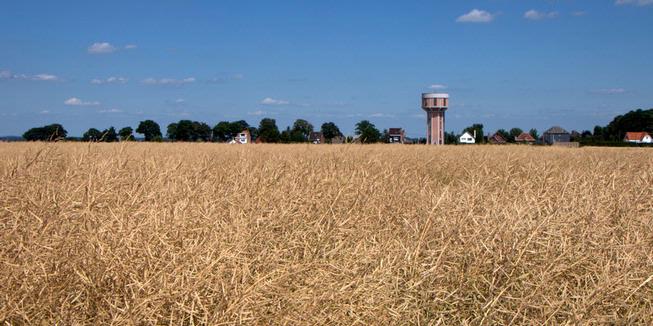
Chateau d’Eau is the name of a striking project envisioned by BHAM design studio and consisting of a water tower conversion in Steenokkerzeel, Belgium.
The tower was built between 1938 and 1941 and was functional until the beginning of the nineties. The works for a complete renovation and conversion into a single family house started in 2007.
According to the architects, “the preservation of existing concrete elements such as the main water conduct, concrete ceilings, concrete stairs and the 250.000 liters concrete water basin were essential to preserve the strong identity of the building.
Every visible concrete element inside was painted in dark grey in order to mark the old from the new. The program foresees two distinct profiles of users. The private and main user is the client, a couple living at the tower daily. Every room is equipped with the latest IT technology, domotics and the possibility to install projectors virtually anywhere on the top floor”.
The unusual residence is thirty meters high and is structured on five floors. The terrace provides a great panoramic view of the nearby village.
Chateau d’Eau is the name of a striking project envisioned by BHAM design studio and consisting of a water tower conversion in Steenokkerzeel, Belgium.
The tower was built between 1938 and 1941 and was functional until the beginning of the nineties. The works for a complete renovation and conversion into a single family house started in 2007.
According to the architects, “the preservation of existing concrete elements such as the main water conduct, concrete ceilings, concrete stairs and the 250.000 liters concrete water basin were essential to preserve the strong identity of the building.
Every visible concrete element inside was painted in dark grey in order to mark the old from the new. The program foresees two distinct profiles of users. The private and main user is the client, a couple living at the tower daily. Every room is equipped with the latest IT technology, domotics and the possibility to install projectors virtually anywhere on the top floor”.
The unusual residence is thirty meters high and is structured on five floors. The terrace provides a great panoramic view of the nearby village.
By:
Unknown
On 21.27
The Building with Funky Mesh Armor - Korean Art Center
Seoul's Kukje Art Centre
The Kukje Art Center in Seoul, South Korea is the latest awe-inspiring creating by New York-based SO-IL. The gallery is a concrete cube situated in the historic urban fabric of Sogyeok-dong, which is being populated by a series of low-rise boutique retail outlets and coffee shops. The structure is wrapped in a funky mesh armor that diffuses sunlight and softens the building's edges. Designed by Front Inc and prefabricated in China, the unique facade ensures the gallery sits in harmony with the neighborhood's character.
Comprised of thousands of small steel rings that together form a pliable envelope, the mesh facade wraps easily around the building, giving it an almost ethereal disguise that is altogether more interesting than concrete. But it also creates interesting shadow and diffuses excess solar gain. A massive space, the art center would exact a high energy load if it weren’t for certain interventions.
Given space restraints, SO-IL buried two of the gallery’s three levels underground and installed perimeter skylights that permit daylighting to penetrate deep into the interior, beyond the street level gallery, to cut down on energy requirements. And finally, circulation is kept to the edge of the building to maintain the clear span art space’s distinct geometry.
The Kukje Art Center in Seoul, South Korea is the latest awe-inspiring creating by New York-based SO-IL. The gallery is a concrete cube situated in the historic urban fabric of Sogyeok-dong, which is being populated by a series of low-rise boutique retail outlets and coffee shops. The structure is wrapped in a funky mesh armor that diffuses sunlight and softens the building's edges. Designed by Front Inc and prefabricated in China, the unique facade ensures the gallery sits in harmony with the neighborhood's character.
Comprised of thousands of small steel rings that together form a pliable envelope, the mesh facade wraps easily around the building, giving it an almost ethereal disguise that is altogether more interesting than concrete. But it also creates interesting shadow and diffuses excess solar gain. A massive space, the art center would exact a high energy load if it weren’t for certain interventions.
Given space restraints, SO-IL buried two of the gallery’s three levels underground and installed perimeter skylights that permit daylighting to penetrate deep into the interior, beyond the street level gallery, to cut down on energy requirements. And finally, circulation is kept to the edge of the building to maintain the clear span art space’s distinct geometry.
By:
Unknown
On 19.26
Senin, 15 April 2013
The Most Creative Book Mountain
MVRDV completes Book Mountain and Library Quarter Spijkenisse
Close to the Port of Rotterdam docks, MVRDV has completed the Spijkenisse Book Mountain, a public library in Spijkenisse’s market square. It features a 480 meter route, lined with bookshelves, that wraps around a stacked, pyramidal form as it is showcased through the library’s glass structure. The “mountain of books” illuminates from within and serves as both an advertisement and an invitation to reading. The adjacent Library Quarter consisting of 42 social housing units, parking and public space is also a project by MVRDV. Together, with the Book Mountain, it strives to form an “exemplary eco-neighborhood”.
The library is designed as an advert for reading, its visible presence and invitation holding great significance for a community with 10 percent illiteracy. From underneath the glass dome the library is visible from all sides, especially from the adjacent market square where the library appears as one big book mountain. Underneath its monumental glass envelope damage to the books by sunlight is off-set by their normal 4 year life-span due to wear and tear from borrowing.
Located in the centre of Spijkenisse, the library with a total surface area of 9.300m2 sits on the market square next to the historical village church. Besides the library the building houses the environmental education centre, a chess club, auditorium, meeting rooms, commercial offices and retail. The exterior of the library refers in shape and materiality to the traditional Dutch Farm, a reminder of the towns agricultural past, which has grown from farming village to Ville Nouvelle in the past 40 years.
The library had to accommodate a number of other partly commercial functions. The stacking of this non-library program forms a pyramidal base on which platforms are projected, housing the libraries bookshelves and shaping a powerful symbol. The book platforms are connected via wide stairs and together form a continuous route of 480 meters around the mountain to its peak where a café offers panoramic views over this Dutch Newtown.
In order to connect the former village centre visually and distinguish clearly between commercial and library program, a ‘blanket’ of brick is laid over the neighborhood and the libraries pyramidal heart. The Library sits on top of this with its floors, walls, ceilings and even doors made of the same brick. This consequent materialization supports the public status of the library by communicating clearly the difference: behind the glass hood a library is visible, behind the brick sits the rest of the program.
Another reference to the towns agricultural past lies in the libraries bookshelves. Made of recycled flowerpots these elements are simultaneously fireproof and economic and provide a perfect background to the books and accompany the visitors through the building by taking on the functions of banister, parapet, information desk and bar. They form another element in the building’s palette of brick, glass and wood: recycled materials. Book shelves out of reach play an important visual role, housing the libraries archive.
Following the maximum permitted volume the Book Mountain is covered by a barn shaped glass envelope with wooden trusses resulting in a transparent almost open air library. Underneath the glass is a public space without air conditioning. In summer natural ventilation and sun screens result in a comfortable indoor climate, in winter under-floor heating and double glazing maintain a stable interior environment. The climate system is based on an innovative combination of proven technology such as underground heat and cold storage, natural ventilation and many other interventions. The award winning invisible integrated technology was developed by Arcadis in collaboration with MVRDV.
The new public library is part of a larger plan to strengthen and intensify the town centre. MVRDV have also designed the neighboring development of 42 houses for a local housing corporation. The apartments inside the plan vary strongly in size, from studio apartments to housing fit for large families, attracting a more diverse urban population. A folly-like tilted house is the centre of this ensemble of abstract traditional typologies: contemporary reference instead of nostalgic replica. Housing and library share a common materiality, public space and environmental technology. In terms of identity the project resembles an out of scale farm, at the same time referring to, and becoming, a monument to the agricultural past of Spijkenisse, and its growth towards a city. On the new market square the outlines of buildings demolished during the 1960’s mark the old centre which has been turned now into a new village centre for a growing town, not nostalgic yet respecting the history.
The development of Book Mountain and the Library Quarter is currently translated into literature: titled “Make Some Noise”, later this year a mix between literature and photo novel will be published by 010/NAi Publishers describing the almost ten years it took realizing the project.
Close to the Port of Rotterdam docks, MVRDV has completed the Spijkenisse Book Mountain, a public library in Spijkenisse’s market square. It features a 480 meter route, lined with bookshelves, that wraps around a stacked, pyramidal form as it is showcased through the library’s glass structure. The “mountain of books” illuminates from within and serves as both an advertisement and an invitation to reading. The adjacent Library Quarter consisting of 42 social housing units, parking and public space is also a project by MVRDV. Together, with the Book Mountain, it strives to form an “exemplary eco-neighborhood”.
The library is designed as an advert for reading, its visible presence and invitation holding great significance for a community with 10 percent illiteracy. From underneath the glass dome the library is visible from all sides, especially from the adjacent market square where the library appears as one big book mountain. Underneath its monumental glass envelope damage to the books by sunlight is off-set by their normal 4 year life-span due to wear and tear from borrowing.
Located in the centre of Spijkenisse, the library with a total surface area of 9.300m2 sits on the market square next to the historical village church. Besides the library the building houses the environmental education centre, a chess club, auditorium, meeting rooms, commercial offices and retail. The exterior of the library refers in shape and materiality to the traditional Dutch Farm, a reminder of the towns agricultural past, which has grown from farming village to Ville Nouvelle in the past 40 years.
The library had to accommodate a number of other partly commercial functions. The stacking of this non-library program forms a pyramidal base on which platforms are projected, housing the libraries bookshelves and shaping a powerful symbol. The book platforms are connected via wide stairs and together form a continuous route of 480 meters around the mountain to its peak where a café offers panoramic views over this Dutch Newtown.
In order to connect the former village centre visually and distinguish clearly between commercial and library program, a ‘blanket’ of brick is laid over the neighborhood and the libraries pyramidal heart. The Library sits on top of this with its floors, walls, ceilings and even doors made of the same brick. This consequent materialization supports the public status of the library by communicating clearly the difference: behind the glass hood a library is visible, behind the brick sits the rest of the program.
Another reference to the towns agricultural past lies in the libraries bookshelves. Made of recycled flowerpots these elements are simultaneously fireproof and economic and provide a perfect background to the books and accompany the visitors through the building by taking on the functions of banister, parapet, information desk and bar. They form another element in the building’s palette of brick, glass and wood: recycled materials. Book shelves out of reach play an important visual role, housing the libraries archive.
Following the maximum permitted volume the Book Mountain is covered by a barn shaped glass envelope with wooden trusses resulting in a transparent almost open air library. Underneath the glass is a public space without air conditioning. In summer natural ventilation and sun screens result in a comfortable indoor climate, in winter under-floor heating and double glazing maintain a stable interior environment. The climate system is based on an innovative combination of proven technology such as underground heat and cold storage, natural ventilation and many other interventions. The award winning invisible integrated technology was developed by Arcadis in collaboration with MVRDV.
The new public library is part of a larger plan to strengthen and intensify the town centre. MVRDV have also designed the neighboring development of 42 houses for a local housing corporation. The apartments inside the plan vary strongly in size, from studio apartments to housing fit for large families, attracting a more diverse urban population. A folly-like tilted house is the centre of this ensemble of abstract traditional typologies: contemporary reference instead of nostalgic replica. Housing and library share a common materiality, public space and environmental technology. In terms of identity the project resembles an out of scale farm, at the same time referring to, and becoming, a monument to the agricultural past of Spijkenisse, and its growth towards a city. On the new market square the outlines of buildings demolished during the 1960’s mark the old centre which has been turned now into a new village centre for a growing town, not nostalgic yet respecting the history.
The development of Book Mountain and the Library Quarter is currently translated into literature: titled “Make Some Noise”, later this year a mix between literature and photo novel will be published by 010/NAi Publishers describing the almost ten years it took realizing the project.
By:
Unknown
On 17.47
Minggu, 14 April 2013
The World's Most Mysterious Buildings
The world's most mysterious buildings
The Woodchester Mansion in the Cotswolds region of England. It was abandoned midconstruction in 1873.
Mysteries come in many forms: ancient, modern, unsolved and unexplained. But the world's most mysterious buildings are a physical force to be reckoned with.
They've become popularized on websites such as abandoned-places.com, weburbanist.com and the granddaddy of them all, atlasobscura.com, an exhaustive user-generated and editor-curated database of the unusual.
Our list of mysteries doesn't trot out cliched write-ups of the Bermuda Triangle and the Egyptian pyramids, nor is it promoting the usual suspects of PR-pushed haunted hotels. These peculiar structures are original, lesser-known and often arcane.
Mystery, after all, must be authentic.
"In an age where it sometimes seems like there's nothing left to discover, our site is for people who still believe in exploration," says Atlas Obscura co-founder Joshua Foer, whose own favorite mysterious buildings include a murder mansion in Los Angeles and an art house in Centralia, Washington.
Our definition of mysterious is broad and varied. Some buildings on our list are being eaten alive by the Earth, such as a sand-swallowed lighthouse in Denmark's Jutland and a lava-buried church in the remote highlands of Mexico. Others have design elements that seem to defy logic or were mysteriously abandoned by their people centuries ago. New York's shadowy Renwick Smallpox Hospital has more recent traces of human life -- and an eerie energy that lingers. We've got the photo proof.
Renwick Hospital, Roosevelt Island, New York City
This abandoned Smallpox Hospital, replete with granite veneer, corbelled parapets and mansard roofs, is a reminder of Gotham's grisly past. Its 100 hospital beds once hosted quarantined immigrants suffering from the gruesome disease. A $4.5 million restoration project will open Renwick to the public in 2013, kicking off with an art project that includes giant butterflies hovering over the site.
Mystery: Renwick is illuminated at night by an anonymous patron, who purportedly has a view of it from an Upper East Side penthouse.
Visit: The American Institute of Architects and Classic Harbor Line offer architecture-themed cruises around Manhattan with lectures on Renwick and other mysterious city sites.
Loretto Chapel, Santa Fe, New Mexico
The imposing Gothic Revival church's spiral staircase is a woodwork masterpiece that somehow connects the choir loft to the ground-level pews without a central column for stability and with wooden pegs instead of nails.
Mystery: Legend has it that an anonymous carpenter built the staircase in 1878 then disappeared without pay.
Visit: Just around the corner is La Posada de Santa Fe, a three-story Victorian mansion turned art-stuffed hotel. Suite 100 was the bedroom of previous owner Julia Staab, and her spirit is said to haunt it.
Kolmanskop Diamond Camp, Skeleton Coast, Namibia
Bushmen considered Namibia's Skeleton Coast "The Land God Made in Anger," while the Portuguese called it "The Gates of Hell." Though the coast received its name because of beached whale bones that scattered its shores during the heyday of the whaling industry, today skeletal remains of more than 1,000 fog-sacked ships and abandoned diamond camps earn it the title. Among the detritus being taken over by desert sands is Minenvewalter, the manager's house at abandoned diamond mine Kolmanskop.
Mystery: Diamond miners purportedly haunt Minenvewalter; their ax-pick-punctured skulls were allegedly found here in the 1960s long after the colony departed.
Visit: Wilderness Safari's Distinctive Namibia circuit includes lion and cheetah treks in the rusty dunes but also a scenic three-hour flight over the wreck-strewn Skeleton Coast.
Skara Brae, Orkney Islands, Scotland
Previously thought to be a Pictish village, this massive and mysterious Orcadian village on the Bay of Skaill is still being excavated -- and changing everything we know about Europe's pre-Celtic era in the process. The 5,000-year-old site predates the Egyptian pyramids.
Mystery: Even though the village was deserted thousands of years ago, the buildings at Skara Brae remain in good condition. Archaeologists don't know why the last inhabitants left, although many theorize it was abandoned because of an apocalyptic event.
Visit: Hurtigruten's "In the Wake of the Vikings" cruise calls on ports in the ancient Orkneys, as well as the Shetlands, Hebrides and Faroes.
Woodchester Mansion, Cotswolds, England
Stone gargoyles festoon this 19th-century neo-Gothic mansion topped with turrets and built of iconic honey-colored Cotswold limestone. It was abandoned midconstruction in 1873 after its devoutly Catholic owner died. Seek out the mansion amid a deeply secluded valley for bat tours, Halloween parties and paranormal nights.
Mystery: During World War II, the house was used as a temporary morgue for Allied troops. Rumors persist of uniform-wearing spirits and 1940s music echoing in the hallways.
Visit: Twenty miles away in Cheltenham, the newly opened Ellenborough Park is a gorgeous 16th-century Tudor-style manor with all the posh benefits of your own mansion.
Therme Vals, Vals, Switzerland
High in the Swiss Alps at the end of a terminal road in a Romansh-speaking pocket of Canton Graubünden is this stark thermal bath designed by Pritzker laureate Peter Zumthor. Slabs of Valser quartzite create a watery labyrinth that's by turns minimalist and quasi-industrial, but consistently eerie.
Mystery: The grottenbad (acoustic chamber) is accessed by a narrow tunnel and allows bathers' vibratos to bounce off the walls, creating a delightfully haunting aural experience.
Visit: Earn some soak time in the bath with Country Walkers' self-guided Walk of the Valais and Goms Valley.
Yaxchilán, Chiapas, Mexico
This obscure fourth-century site, along the Usumacinta River at the Guatemala border, draped in thick strangler vines and echoing with shrieking howler monkeys, is a tourist-free standout among Mexico's many ruins. Visitors approach by boat, then enter through El Laberinto (The Labyrinth), a limestone building with painted stucco panels and topped with decorative cresterías dedicated to ruler kings such as Moon Skull.
Mystery: Yaxchilán was mysteriously deserted in the ninth century, but pilings along each side of the river suggest that it was the site of a sophisticated suspension bridge.
Visit: Travel like Mayans, by water, on Mountain Travel Sobek's Chiapas Wildlife Adventure, which includes whitewater-rafting runs along the Rio Santo Domingo and stops at Yaxchilán and other ancient ruins.
Rubjerg Knude Lighthouse, Hjørring, Denmark
Jutting out from a desolate dune called Lønstrup Klint (cliff), this ghostly sentinel was built in 1900 but abandoned in 1968 after sands and sea began to devour it whole. The sturdy 75-foot-tall building will likely collapse from shifting sands and coastal erosion in the next decade -- and it makes you wonder what other Viking relics lie beneath the sand.
Mystery: The tower was built on a dune-less cliff 656 feet from the sea and nearly 200 feet above sea level, yet, despite rescue attempts, the elements slowly swallowed it over the years.
Visit: Twenty miles north is a Danish Modernist country house steps from a more tranquil beach.
San Juan Parangaricutiro, Michoacán, Mexico
In 1943, an explosive volcano in Mexico's remote mountain state of Michoacán began spewing lava, eventually burying the villages of San Juan Parangaricutiro and Paricutín under a coal-black layer of chunky lava.
Mystery: The crucifix-topped bell tower of the San Juan Parangaricutiro Church just so happened to be spared from the destructive lava, while the vacated church's altar, at the other end of the church, is also entirely intact.
Visit: Abercrombie & Kent's tailor-made Mexican Colonial Splendors trip takes you to the lava-buried site from the Purépecha mountain village of Angahuan, 30 minutes away.
Coral Castle, Homestead, Florida
Made from 1,100 tons of limestone boulders -- bigger than those at Stonehenge -- this structure, located just south of Miami, was built from 1923 to 1951 by a single man, a tiny Latvian immigrant named Edward Leedskalnin, as his home and an homage to the love of his life who left him the night before their wedding.
Mystery: How did he do it? The jilted man claimed he knew the secret to the pyramids' construction. Other details -- no mortar, precise seams, physics-defying balancing acts -- have also stumped scientists for decades.
Visit: Take a guided tour for some insights into this quirky castle, where even the rocking chairs are made of stone.
The Woodchester Mansion in the Cotswolds region of England. It was abandoned midconstruction in 1873.
Mysteries come in many forms: ancient, modern, unsolved and unexplained. But the world's most mysterious buildings are a physical force to be reckoned with.
They've become popularized on websites such as abandoned-places.com, weburbanist.com and the granddaddy of them all, atlasobscura.com, an exhaustive user-generated and editor-curated database of the unusual.
Our list of mysteries doesn't trot out cliched write-ups of the Bermuda Triangle and the Egyptian pyramids, nor is it promoting the usual suspects of PR-pushed haunted hotels. These peculiar structures are original, lesser-known and often arcane.
Mystery, after all, must be authentic.
"In an age where it sometimes seems like there's nothing left to discover, our site is for people who still believe in exploration," says Atlas Obscura co-founder Joshua Foer, whose own favorite mysterious buildings include a murder mansion in Los Angeles and an art house in Centralia, Washington.
Our definition of mysterious is broad and varied. Some buildings on our list are being eaten alive by the Earth, such as a sand-swallowed lighthouse in Denmark's Jutland and a lava-buried church in the remote highlands of Mexico. Others have design elements that seem to defy logic or were mysteriously abandoned by their people centuries ago. New York's shadowy Renwick Smallpox Hospital has more recent traces of human life -- and an eerie energy that lingers. We've got the photo proof.
Renwick Hospital, Roosevelt Island, New York City
This abandoned Smallpox Hospital, replete with granite veneer, corbelled parapets and mansard roofs, is a reminder of Gotham's grisly past. Its 100 hospital beds once hosted quarantined immigrants suffering from the gruesome disease. A $4.5 million restoration project will open Renwick to the public in 2013, kicking off with an art project that includes giant butterflies hovering over the site.
Mystery: Renwick is illuminated at night by an anonymous patron, who purportedly has a view of it from an Upper East Side penthouse.
Visit: The American Institute of Architects and Classic Harbor Line offer architecture-themed cruises around Manhattan with lectures on Renwick and other mysterious city sites.
Loretto Chapel, Santa Fe, New Mexico
The imposing Gothic Revival church's spiral staircase is a woodwork masterpiece that somehow connects the choir loft to the ground-level pews without a central column for stability and with wooden pegs instead of nails.
Mystery: Legend has it that an anonymous carpenter built the staircase in 1878 then disappeared without pay.
Visit: Just around the corner is La Posada de Santa Fe, a three-story Victorian mansion turned art-stuffed hotel. Suite 100 was the bedroom of previous owner Julia Staab, and her spirit is said to haunt it.
Kolmanskop Diamond Camp, Skeleton Coast, Namibia
Bushmen considered Namibia's Skeleton Coast "The Land God Made in Anger," while the Portuguese called it "The Gates of Hell." Though the coast received its name because of beached whale bones that scattered its shores during the heyday of the whaling industry, today skeletal remains of more than 1,000 fog-sacked ships and abandoned diamond camps earn it the title. Among the detritus being taken over by desert sands is Minenvewalter, the manager's house at abandoned diamond mine Kolmanskop.
Mystery: Diamond miners purportedly haunt Minenvewalter; their ax-pick-punctured skulls were allegedly found here in the 1960s long after the colony departed.
Visit: Wilderness Safari's Distinctive Namibia circuit includes lion and cheetah treks in the rusty dunes but also a scenic three-hour flight over the wreck-strewn Skeleton Coast.
Skara Brae, Orkney Islands, Scotland
Previously thought to be a Pictish village, this massive and mysterious Orcadian village on the Bay of Skaill is still being excavated -- and changing everything we know about Europe's pre-Celtic era in the process. The 5,000-year-old site predates the Egyptian pyramids.
Mystery: Even though the village was deserted thousands of years ago, the buildings at Skara Brae remain in good condition. Archaeologists don't know why the last inhabitants left, although many theorize it was abandoned because of an apocalyptic event.
Visit: Hurtigruten's "In the Wake of the Vikings" cruise calls on ports in the ancient Orkneys, as well as the Shetlands, Hebrides and Faroes.
Woodchester Mansion, Cotswolds, England
Stone gargoyles festoon this 19th-century neo-Gothic mansion topped with turrets and built of iconic honey-colored Cotswold limestone. It was abandoned midconstruction in 1873 after its devoutly Catholic owner died. Seek out the mansion amid a deeply secluded valley for bat tours, Halloween parties and paranormal nights.
Mystery: During World War II, the house was used as a temporary morgue for Allied troops. Rumors persist of uniform-wearing spirits and 1940s music echoing in the hallways.
Visit: Twenty miles away in Cheltenham, the newly opened Ellenborough Park is a gorgeous 16th-century Tudor-style manor with all the posh benefits of your own mansion.
Therme Vals, Vals, Switzerland
High in the Swiss Alps at the end of a terminal road in a Romansh-speaking pocket of Canton Graubünden is this stark thermal bath designed by Pritzker laureate Peter Zumthor. Slabs of Valser quartzite create a watery labyrinth that's by turns minimalist and quasi-industrial, but consistently eerie.
Mystery: The grottenbad (acoustic chamber) is accessed by a narrow tunnel and allows bathers' vibratos to bounce off the walls, creating a delightfully haunting aural experience.
Visit: Earn some soak time in the bath with Country Walkers' self-guided Walk of the Valais and Goms Valley.
Yaxchilán, Chiapas, Mexico
This obscure fourth-century site, along the Usumacinta River at the Guatemala border, draped in thick strangler vines and echoing with shrieking howler monkeys, is a tourist-free standout among Mexico's many ruins. Visitors approach by boat, then enter through El Laberinto (The Labyrinth), a limestone building with painted stucco panels and topped with decorative cresterías dedicated to ruler kings such as Moon Skull.
Mystery: Yaxchilán was mysteriously deserted in the ninth century, but pilings along each side of the river suggest that it was the site of a sophisticated suspension bridge.
Visit: Travel like Mayans, by water, on Mountain Travel Sobek's Chiapas Wildlife Adventure, which includes whitewater-rafting runs along the Rio Santo Domingo and stops at Yaxchilán and other ancient ruins.
Rubjerg Knude Lighthouse, Hjørring, Denmark
Jutting out from a desolate dune called Lønstrup Klint (cliff), this ghostly sentinel was built in 1900 but abandoned in 1968 after sands and sea began to devour it whole. The sturdy 75-foot-tall building will likely collapse from shifting sands and coastal erosion in the next decade -- and it makes you wonder what other Viking relics lie beneath the sand.
Mystery: The tower was built on a dune-less cliff 656 feet from the sea and nearly 200 feet above sea level, yet, despite rescue attempts, the elements slowly swallowed it over the years.
Visit: Twenty miles north is a Danish Modernist country house steps from a more tranquil beach.
San Juan Parangaricutiro, Michoacán, Mexico
In 1943, an explosive volcano in Mexico's remote mountain state of Michoacán began spewing lava, eventually burying the villages of San Juan Parangaricutiro and Paricutín under a coal-black layer of chunky lava.
Mystery: The crucifix-topped bell tower of the San Juan Parangaricutiro Church just so happened to be spared from the destructive lava, while the vacated church's altar, at the other end of the church, is also entirely intact.
Visit: Abercrombie & Kent's tailor-made Mexican Colonial Splendors trip takes you to the lava-buried site from the Purépecha mountain village of Angahuan, 30 minutes away.
Coral Castle, Homestead, Florida
Made from 1,100 tons of limestone boulders -- bigger than those at Stonehenge -- this structure, located just south of Miami, was built from 1923 to 1951 by a single man, a tiny Latvian immigrant named Edward Leedskalnin, as his home and an homage to the love of his life who left him the night before their wedding.
Mystery: How did he do it? The jilted man claimed he knew the secret to the pyramids' construction. Other details -- no mortar, precise seams, physics-defying balancing acts -- have also stumped scientists for decades.
Visit: Take a guided tour for some insights into this quirky castle, where even the rocking chairs are made of stone.
By:
Unknown
On 00.51
Kamis, 11 April 2013
A 2 Year Old Chinese Girl Buy Luxury Apartment in New York City
A $6.2 Million Apartment for a 2-Year-Old? Such is NYC's Luxury Housing Market
Talk about investing in the future. A Chinese woman recently purchased a $6.5 million condo in the One57 building in Midtown Manhattan, which is to be New York’s tallest residential tower when it's completed next year. She wasn’t buying the place for herself, she explained to her broker, but for her young daughter. Her very young daughter. From the Daily News:
“We’re running around the city looking at things, and I finally said, ‘Why exactly are you buying?’” broker Kevin Brown, of Sotheby’s International, told CCTV News. “She said it had to do with her daughter, who was planning on going to Columbia or NYU, maybe Harvard, so she needed to be in the center of the city, and that is why she was picking this one particular apartment,” Brown said. “I said, ‘How old is your daughter?’ And she said, ‘Well, she’s 2.’ And I was just shocked.”
Shocked he may have been -- although the One57 pad was kind of low-end compared to the $88 million, 6,700-square foot Central Park West apartment that Russian fertilizer mogul Dmitri Rybolovlev bought for his (18-year-old) daughter’s alleged use in 2012. In truth, the Chinese millionaire’s forward-thinking purchase was hardly unusual. The high-end real estate market in North American cities such as New York, Miami, and Vancouver has been dominated by foreign investors for years now, with buyers forking over huge sums of money to buy deluxe apartments that they or their lucky offspring might intend to occupy for a few weeks here or there, or in the far future, if ever.
The trend has left some upscale urban neighborhoods feeling hollowed-out.
In New York, luxury ghost apartments have been steadily proliferating, with certain parts of Manhattan especially devoid of life According to a 2011 New York Times article, in the chunk of the Upper East Side where the Chinese woman bought her little girl a future dream home, “about 30 percent of the more than 5,000 apartments are routinely vacant more than 10 months a year.” Census figures from 2010 show that since 2000, there was a 70 percent increase in absentee-owned apartments in Manhattan, which jumped from 19,000 to 34,000, with the wealthiest neighborhoods seeing even more pronounced gains. The trend, which reversed briefly after 2007 because of the recession, has been building again -- to the point where real estate blog Curbed made fun of the Times for even taking note of it in yet another piece earlier this year.
Some wealthy residents of these lonely luxury abodes, reports the Times, report feeling isolated. And while it may be hard to feel much sympathy for well-heeled people who find themselves rattling around the hallways with only an attentive building staff to chat with, the effect on the surrounding neighborhood is real.
In some parts of Vancouver, where attracting residential development in the city’s urban core has been a point of pride of city planners, the effect is tangible. As many as 25 percent of the condos in the city’s Coal Harbour neighborhood are owned by “non-residents,” with mixed results for the city, according to a CBC News report:
"They pay lots of money in taxes and use very few city services,” said Tsur Somerville, an associate professor at the UBC Centre for Urban Economics and Real Estate.
But there is a downside to having so many vacant units.
“From a city revenue standpoint these units are wonderful. On the other hand, most of us don't want to live in a ghost town,” Somerville added.
The high vacancy rate means less business for neighbourhood shops and and restaurants in Coal Harbour....
Nonetheless, Yan said some Vancouver neighbourhoods may appear to be very dense, but actually are not.
So it seems that the high-end residential developments that have come to dominate much of Manhattan and other gentrifying downtowns have the potential to generate not only tax revenue, but also solitude -- not only for the people who have the money and desire to buy that elusive and not always desirable commodity, but for their neighbors as well. Absentee buyers may be investing in their own future, but it's questionable what the return will be for the cities that are taking their cash.
Talk about investing in the future. A Chinese woman recently purchased a $6.5 million condo in the One57 building in Midtown Manhattan, which is to be New York’s tallest residential tower when it's completed next year. She wasn’t buying the place for herself, she explained to her broker, but for her young daughter. Her very young daughter. From the Daily News:
“We’re running around the city looking at things, and I finally said, ‘Why exactly are you buying?’” broker Kevin Brown, of Sotheby’s International, told CCTV News. “She said it had to do with her daughter, who was planning on going to Columbia or NYU, maybe Harvard, so she needed to be in the center of the city, and that is why she was picking this one particular apartment,” Brown said. “I said, ‘How old is your daughter?’ And she said, ‘Well, she’s 2.’ And I was just shocked.”
Shocked he may have been -- although the One57 pad was kind of low-end compared to the $88 million, 6,700-square foot Central Park West apartment that Russian fertilizer mogul Dmitri Rybolovlev bought for his (18-year-old) daughter’s alleged use in 2012. In truth, the Chinese millionaire’s forward-thinking purchase was hardly unusual. The high-end real estate market in North American cities such as New York, Miami, and Vancouver has been dominated by foreign investors for years now, with buyers forking over huge sums of money to buy deluxe apartments that they or their lucky offspring might intend to occupy for a few weeks here or there, or in the far future, if ever.
The trend has left some upscale urban neighborhoods feeling hollowed-out.
In New York, luxury ghost apartments have been steadily proliferating, with certain parts of Manhattan especially devoid of life According to a 2011 New York Times article, in the chunk of the Upper East Side where the Chinese woman bought her little girl a future dream home, “about 30 percent of the more than 5,000 apartments are routinely vacant more than 10 months a year.” Census figures from 2010 show that since 2000, there was a 70 percent increase in absentee-owned apartments in Manhattan, which jumped from 19,000 to 34,000, with the wealthiest neighborhoods seeing even more pronounced gains. The trend, which reversed briefly after 2007 because of the recession, has been building again -- to the point where real estate blog Curbed made fun of the Times for even taking note of it in yet another piece earlier this year.
Some wealthy residents of these lonely luxury abodes, reports the Times, report feeling isolated. And while it may be hard to feel much sympathy for well-heeled people who find themselves rattling around the hallways with only an attentive building staff to chat with, the effect on the surrounding neighborhood is real.
In some parts of Vancouver, where attracting residential development in the city’s urban core has been a point of pride of city planners, the effect is tangible. As many as 25 percent of the condos in the city’s Coal Harbour neighborhood are owned by “non-residents,” with mixed results for the city, according to a CBC News report:
"They pay lots of money in taxes and use very few city services,” said Tsur Somerville, an associate professor at the UBC Centre for Urban Economics and Real Estate.
But there is a downside to having so many vacant units.
“From a city revenue standpoint these units are wonderful. On the other hand, most of us don't want to live in a ghost town,” Somerville added.
The high vacancy rate means less business for neighbourhood shops and and restaurants in Coal Harbour....
Nonetheless, Yan said some Vancouver neighbourhoods may appear to be very dense, but actually are not.
So it seems that the high-end residential developments that have come to dominate much of Manhattan and other gentrifying downtowns have the potential to generate not only tax revenue, but also solitude -- not only for the people who have the money and desire to buy that elusive and not always desirable commodity, but for their neighbors as well. Absentee buyers may be investing in their own future, but it's questionable what the return will be for the cities that are taking their cash.
By:
Unknown
On 01.18
Selasa, 02 April 2013
God is in The Details
Ludwig Mies van der Rohe - The Leader of Modern Architecture
27th March 1886 – 17th August 1969
Ludwig Mies van der Rohe (born Maria Ludwig Michael Mies; March 27, 1886 – August 19, 1969) was a German-American architect. He is commonly referred to, and was addressed, as Mies, his surname. He served as the last director of the Bauhaus. Along with Le Corbusier, Alvar Aalto, and Frank Lloyd Wright, he is widely regarded as one of the pioneering masters of modern architecture.
Mies, like many of his post-World War I contemporaries, sought to establish a new architectural style that could represent modern times just as Classical and Gothic did for their own eras. He created an influential twentieth century architectural style, stated with extreme clarity and simplicity. His mature buildings made use of modern materials such as industrial steel and plate glass to define interior spaces. He strove toward an architecture with a minimal framework of structural order balanced against the implied freedom of free-flowing open space. He called his buildings "skin and bones" architecture. He sought a rational approach that would guide the creative process of architectural design, but he was always concerned with expressing the spirit of the modern era. He is often associated with his quotation of the aphorisms, "less is more" and "God is in the details".
When it comes to the big names of twentieth century design, they don’t come much bigger (or longer) than Ludwig Mies van der Rohe. A pioneering and hugely influential architect, a dedicated and passionate educator, coiner of several catchy aphorisms, and – luckily for us – a dab-hand at designing furniture.
Mies was, first and foremost, an architect. Even before taking on the influential role of Director of Architecture at the Bauhaus Design School, he had already been architectural director of the Werkbund, and had helped to found the architectural association Der Ring.
All of which is to say that Mies was never one of those “not fully appreciated in his lifetime” types.
No, Mies was big news from very early in his career, first driving modernist architecture forward in Europe during the early part of the twentieth century, and later (after emigrating to America in 1937) giving Frank Lloyd Wright a run for his money as “America’s Greatest Living Architect.”
Mies was also one of the most intellectual of all modernist architects, and spent much of his life pursuing a rational approach to design, his goal being a system that others could use to create buildings as powerful and beautiful as those Mies himself designed. Typically modest, when his students failed to achieve such impossibly high standards, Mies blamed flaws in his teaching method.
Much to our relief, Mies managed to encapsulate his philosophical pursuits in pithy aphorisms, such as “God is in the details”, and “Less is more”, and clean, innately appealing designs.
His most famous furniture designs – the Barcelona Chair, and the Brno Chair – reflect the same philosophical underpinnings that drove his architecture. Both are concerned with the use of space, their forms being defined as much by the space around them as by the structure of the chairs themselves, and both employ a striking combination of sleek modernist steel and luxurious leather.
Mies’s overarching ambition was to establish a style of design that would represent modern times, much as Classical and Gothic did for their own eras. In many ways he achieved this ambition, but we like to think that he also transcended it, creating designs that appear far more timeless than timely.
27th March 1886 – 17th August 1969
Ludwig Mies van der Rohe (born Maria Ludwig Michael Mies; March 27, 1886 – August 19, 1969) was a German-American architect. He is commonly referred to, and was addressed, as Mies, his surname. He served as the last director of the Bauhaus. Along with Le Corbusier, Alvar Aalto, and Frank Lloyd Wright, he is widely regarded as one of the pioneering masters of modern architecture.
Mies, like many of his post-World War I contemporaries, sought to establish a new architectural style that could represent modern times just as Classical and Gothic did for their own eras. He created an influential twentieth century architectural style, stated with extreme clarity and simplicity. His mature buildings made use of modern materials such as industrial steel and plate glass to define interior spaces. He strove toward an architecture with a minimal framework of structural order balanced against the implied freedom of free-flowing open space. He called his buildings "skin and bones" architecture. He sought a rational approach that would guide the creative process of architectural design, but he was always concerned with expressing the spirit of the modern era. He is often associated with his quotation of the aphorisms, "less is more" and "God is in the details".
When it comes to the big names of twentieth century design, they don’t come much bigger (or longer) than Ludwig Mies van der Rohe. A pioneering and hugely influential architect, a dedicated and passionate educator, coiner of several catchy aphorisms, and – luckily for us – a dab-hand at designing furniture.
Mies was, first and foremost, an architect. Even before taking on the influential role of Director of Architecture at the Bauhaus Design School, he had already been architectural director of the Werkbund, and had helped to found the architectural association Der Ring.
All of which is to say that Mies was never one of those “not fully appreciated in his lifetime” types.
No, Mies was big news from very early in his career, first driving modernist architecture forward in Europe during the early part of the twentieth century, and later (after emigrating to America in 1937) giving Frank Lloyd Wright a run for his money as “America’s Greatest Living Architect.”
Mies was also one of the most intellectual of all modernist architects, and spent much of his life pursuing a rational approach to design, his goal being a system that others could use to create buildings as powerful and beautiful as those Mies himself designed. Typically modest, when his students failed to achieve such impossibly high standards, Mies blamed flaws in his teaching method.
Much to our relief, Mies managed to encapsulate his philosophical pursuits in pithy aphorisms, such as “God is in the details”, and “Less is more”, and clean, innately appealing designs.
His most famous furniture designs – the Barcelona Chair, and the Brno Chair – reflect the same philosophical underpinnings that drove his architecture. Both are concerned with the use of space, their forms being defined as much by the space around them as by the structure of the chairs themselves, and both employ a striking combination of sleek modernist steel and luxurious leather.
Mies’s overarching ambition was to establish a style of design that would represent modern times, much as Classical and Gothic did for their own eras. In many ways he achieved this ambition, but we like to think that he also transcended it, creating designs that appear far more timeless than timely.
By:
Unknown
On 20.26
Cliff Hanging Restaurant
Fangweng – China’s Cliff-Hanging Restaurant
Trekking in the mountains generally means having to survive on packaged food; but not if you’re in China. There’s a particular mountain in the Hubei Province, 12 km north of the city of Yichang, where you can actually experience fine-dining on the side of a cliff. Located in the Happy Valley of Xiling Gorge, the Fangweng hanging restaurant offers a breathtaking view of its natural surroundings to adventurers brave enough to set foot in it.
The dull brick building that acts as an entrance to the Fangweng Restaurant simply doesn’t do the place justice, and it’s only after you pass through it that you can give yourself a pat on the back for discovering such a unique venue to experience Chinese cuisine while admiring the natural beauty of Xiling Gorge. Unless you’re afraid of heights, in which case the 30-meter-long narrow concrete bridge hanging on the side of a vertical cliff overlooking the Yangtze River might just be your worse nightmare. Luckily, there’s a metal railing you can grab on to while you crawl your way to the actual restaurant. The bridge leads to a dining hall carved into the cliff-side, where most of the tables are set. Warmly lit by traditional lamps hanging from the ceiling and decorated with Chinese furnishings, the cave itself is a sight to behold, but the main attractions of Fangwen are the two concrete platforms extending away from the cliff, from where diners can see all the wonders of Happy Valley or watch bungee jumpers as they leap off a nearby bridge.
The Fangweng Restaurant offers a variety of local specialties, based on freshwater fish, duck, pork and even turtle, either smothered in vegetables or spiced up with hot peppers and chili powder. But even if you’re not a fan of Chinese food, hanging on the side of a cliff and taking in all the natural beauty of the surroundings is definitely worth the visit.
Trekking in the mountains generally means having to survive on packaged food; but not if you’re in China. There’s a particular mountain in the Hubei Province, 12 km north of the city of Yichang, where you can actually experience fine-dining on the side of a cliff. Located in the Happy Valley of Xiling Gorge, the Fangweng hanging restaurant offers a breathtaking view of its natural surroundings to adventurers brave enough to set foot in it.
The dull brick building that acts as an entrance to the Fangweng Restaurant simply doesn’t do the place justice, and it’s only after you pass through it that you can give yourself a pat on the back for discovering such a unique venue to experience Chinese cuisine while admiring the natural beauty of Xiling Gorge. Unless you’re afraid of heights, in which case the 30-meter-long narrow concrete bridge hanging on the side of a vertical cliff overlooking the Yangtze River might just be your worse nightmare. Luckily, there’s a metal railing you can grab on to while you crawl your way to the actual restaurant. The bridge leads to a dining hall carved into the cliff-side, where most of the tables are set. Warmly lit by traditional lamps hanging from the ceiling and decorated with Chinese furnishings, the cave itself is a sight to behold, but the main attractions of Fangwen are the two concrete platforms extending away from the cliff, from where diners can see all the wonders of Happy Valley or watch bungee jumpers as they leap off a nearby bridge.
The Fangweng Restaurant offers a variety of local specialties, based on freshwater fish, duck, pork and even turtle, either smothered in vegetables or spiced up with hot peppers and chili powder. But even if you’re not a fan of Chinese food, hanging on the side of a cliff and taking in all the natural beauty of the surroundings is definitely worth the visit.
By:
Unknown
On 20.20
Church For Sale
Moonee Ponds converted church sells for $2.4 million
A converted church in Melbourne’s Moonee Ponds has sold for $2.4 million.
Located at 1 Hudson Street Moonee Ponds, the sale was secured by John Morello from Jellis Craig Kensington. The architecturally transformed Moonee Ponds church had an incredible 12,500 internet hits and 325 inspections.
So in anticipation of a huge auction day crowd, the agency organised a coffee cart with complimentary drinks.
There were more than 300 spectators and three bidders, with the offering sold just after auction.
Its listing was reported by Property Observer last month.
Designed by owner and architect duo Dominic and Marie Bagnato, the property has five bedrooms, five bathrooms, a gym and a basement wine cellar.
The Gothic-style timber church was originally built by Tadgell Brothers following the general consensus at an 1890 resident’s meeting that the area needed a church for religious purposes and Sunday school.
The church was officially opened by then Lord Bishop of Melbourne Dr Goe.
The church acted as a venue for sports meetings, working bees and other social activities.
The church was part of the St Thomas parish, before leaving temporarily in 1915 and permanently in 1960.
In 1904, an extension to the church was built at the rear and in 1918 a vicarage was built nearby. A church hall was built in 1927.
The current vendors bought the church itself in 2007.
A converted church in Melbourne’s Moonee Ponds has sold for $2.4 million.
Located at 1 Hudson Street Moonee Ponds, the sale was secured by John Morello from Jellis Craig Kensington. The architecturally transformed Moonee Ponds church had an incredible 12,500 internet hits and 325 inspections.
So in anticipation of a huge auction day crowd, the agency organised a coffee cart with complimentary drinks.
There were more than 300 spectators and three bidders, with the offering sold just after auction.
Its listing was reported by Property Observer last month.
Designed by owner and architect duo Dominic and Marie Bagnato, the property has five bedrooms, five bathrooms, a gym and a basement wine cellar.
The Gothic-style timber church was originally built by Tadgell Brothers following the general consensus at an 1890 resident’s meeting that the area needed a church for religious purposes and Sunday school.
The church was officially opened by then Lord Bishop of Melbourne Dr Goe.
The church acted as a venue for sports meetings, working bees and other social activities.
The church was part of the St Thomas parish, before leaving temporarily in 1915 and permanently in 1960.
In 1904, an extension to the church was built at the rear and in 1918 a vicarage was built nearby. A church hall was built in 1927.
The current vendors bought the church itself in 2007.
By:
Unknown
On 01.19
Senin, 01 April 2013
Volcanic Rock House in The Mineral Residence
Planning korea: the mineral residence on jeju island
The newest addition to planning korea's airest city-berjaya jeju resort on the rapidly developing jeju island is 'the mineral', a residence/event venue
that echoes the natural shape of the crystal clusters that form on the local volcanic rock. the structure is located on the southern coast of the island
in the gotjawal forest, and has broken ground on march 7th, to be completed by september of 2014. a central courtyard with a 10-meter wide rectangular
pool that extends out towards the sea is the anchor around which a crescent-shape structure houses the patinated metal mineral pods. four separate
entrances and the modular-like construction allows the complex to be joined into a single volume or subdivided into smaller residential units. a rooftop
garden vertically extends the ground-scape creating an ideal environment from which to view the night sky or the forest canopy.
The newest addition to planning korea's airest city-berjaya jeju resort on the rapidly developing jeju island is 'the mineral', a residence/event venue
that echoes the natural shape of the crystal clusters that form on the local volcanic rock. the structure is located on the southern coast of the island
in the gotjawal forest, and has broken ground on march 7th, to be completed by september of 2014. a central courtyard with a 10-meter wide rectangular
pool that extends out towards the sea is the anchor around which a crescent-shape structure houses the patinated metal mineral pods. four separate
entrances and the modular-like construction allows the complex to be joined into a single volume or subdivided into smaller residential units. a rooftop
garden vertically extends the ground-scape creating an ideal environment from which to view the night sky or the forest canopy.
By:
Unknown
On 19.23
Minggu, 31 Maret 2013
The World's Most Narrow House
Invigorating Narrow House by Fujiwaramuro Architects
Fujiwaramuro Architects recently finished the Narrow House, a residential downtown house measuring just 36.95 sqm in Nada, Kobe, Japan. This incredible residence demonstrates that you don’t need a vast amount of space for cozy comfort. The home contains two bedrooms, kitchen, a garage, a living and dining room, and an additional storage room. All are spread across three floors with an opening in the middle. Fujiwaramuro Architects have been working on challenging projects since 2002.
On a slight 37 square meter site in the hyogo prefecture, a timber-faced home by fujiwaramuro architects combats spatial narrowness with
dimensional gaps and holes within its interior field. the vertically oriented wood skin connects a multi-level single family home with a strikingly
grained exterior. by contrast, a large central atrium organizes the space in sectionally, while wooden grates dematerialize the lateral planes.
these two architectural gestures create a sunlit space that reaches the bottom of the house. the center void also serves as storage space and works
in conjunction with the asymmetric smattering of apertures that puncture the envelope. room spaces are layered with a network of ladders that
culminate in a rooftop loft.
Fujiwaramuro Architects recently finished the Narrow House, a residential downtown house measuring just 36.95 sqm in Nada, Kobe, Japan. This incredible residence demonstrates that you don’t need a vast amount of space for cozy comfort. The home contains two bedrooms, kitchen, a garage, a living and dining room, and an additional storage room. All are spread across three floors with an opening in the middle. Fujiwaramuro Architects have been working on challenging projects since 2002.
On a slight 37 square meter site in the hyogo prefecture, a timber-faced home by fujiwaramuro architects combats spatial narrowness with
dimensional gaps and holes within its interior field. the vertically oriented wood skin connects a multi-level single family home with a strikingly
grained exterior. by contrast, a large central atrium organizes the space in sectionally, while wooden grates dematerialize the lateral planes.
these two architectural gestures create a sunlit space that reaches the bottom of the house. the center void also serves as storage space and works
in conjunction with the asymmetric smattering of apertures that puncture the envelope. room spaces are layered with a network of ladders that
culminate in a rooftop loft.
By:
Unknown
On 21.33
Rabu, 20 Maret 2013
Shipping Container For House of Poor People
At home, in a Shanghai shipping container
For $80 a month, families can opt to live in a shipping container in the bustling Chinese city of Shanghai.
People stand outside shipping containers serving as their accommodation, as a car passes through a street, in Shanghai March 4, 2013. The containers, which house different families, were set up by the landlord, who charges a rent of 500 yuan ($ 80) per month for each container.
For $80 a month, families can opt to live in a shipping container in the bustling Chinese city of Shanghai.
People stand outside shipping containers serving as their accommodation, as a car passes through a street, in Shanghai March 4, 2013. The containers, which house different families, were set up by the landlord, who charges a rent of 500 yuan ($ 80) per month for each container.
By:
Unknown
On 18.15
Jumat, 15 Maret 2013
Chinese Ghost Town
Where is everyone? The derelict majesty of Chinese ghost town built to house one million, but with less than 30,000 residents
Construction on the Kangbashi New Area of the city of Ordos started in 2004
It is filled with state-of-the-art infrastructure and stunning architectural structures
Ghost town: The Kangbashi New Area of the Chinese city of Ordos was built to house a million residents. Pictured is the central Linyinlu Square
With sprawling housing developments and state-of-the-art skyscrapers, the outward impression is of a bustling metropolis.
But look closer and the so-called Kangbashi New Area of the Chinese city of Ordos is anything but teeming with people.
Known as the ghost town district of the wealthy mining city, it was built to house a million residents.
But less than 30,000 live in this spanking new town, the construction of which started in 2004.
Yet it is filled with state-of-the-art infrastructure and stunning architectural structures like the Ordos Museum.
There are many reasons why people have stayed away, soaring property prices being the most cited.
Its close proximity to the existing old town of Dongsheng, about 15miles away, is also thought to have kept Kangbashi empty.
These pictures reveal a district filled with elaborate buildings and open spaces that are almost completely devoid of life.
Ordos officials announced they were to build the Kangbashi New Area on the site of two former villages, and next to three existing reservoirs, in 2003.
China last year announced plans to build 20 cities a year for the next 20 years.
And despite pictures showing some of the country's reported 64million empty homes, Chinese authorities have since erected masses more buildings.
But a government think-tank has warned that China's real estate bubble is getting worse, with property prices in major cities overvalued by as much as 70 per cent.
Of the 35 major cities surveyed in 2010, property prices in eleven, including Beijing and Shanghai, were between 30 and 50 per cent above their market value, the China Daily said, citing the Chinese Academy of Social Sciences.
Prices in Fuzhou, capital of the south-eastern province of Fujian, had the worst property bubble with average house prices more than 70 per cent higher than their market value, according to the survey conducted in September.
The average price in the 35 cities surveyed was nearly 30 per cent above the market value, the report said.
Construction on the Kangbashi New Area of the city of Ordos started in 2004
It is filled with state-of-the-art infrastructure and stunning architectural structures
Ghost town: The Kangbashi New Area of the Chinese city of Ordos was built to house a million residents. Pictured is the central Linyinlu Square
With sprawling housing developments and state-of-the-art skyscrapers, the outward impression is of a bustling metropolis.
But look closer and the so-called Kangbashi New Area of the Chinese city of Ordos is anything but teeming with people.
Known as the ghost town district of the wealthy mining city, it was built to house a million residents.
But less than 30,000 live in this spanking new town, the construction of which started in 2004.
Yet it is filled with state-of-the-art infrastructure and stunning architectural structures like the Ordos Museum.
There are many reasons why people have stayed away, soaring property prices being the most cited.
Its close proximity to the existing old town of Dongsheng, about 15miles away, is also thought to have kept Kangbashi empty.
These pictures reveal a district filled with elaborate buildings and open spaces that are almost completely devoid of life.
Ordos officials announced they were to build the Kangbashi New Area on the site of two former villages, and next to three existing reservoirs, in 2003.
China last year announced plans to build 20 cities a year for the next 20 years.
And despite pictures showing some of the country's reported 64million empty homes, Chinese authorities have since erected masses more buildings.
But a government think-tank has warned that China's real estate bubble is getting worse, with property prices in major cities overvalued by as much as 70 per cent.
Of the 35 major cities surveyed in 2010, property prices in eleven, including Beijing and Shanghai, were between 30 and 50 per cent above their market value, the China Daily said, citing the Chinese Academy of Social Sciences.
Prices in Fuzhou, capital of the south-eastern province of Fujian, had the worst property bubble with average house prices more than 70 per cent higher than their market value, according to the survey conducted in September.
The average price in the 35 cities surveyed was nearly 30 per cent above the market value, the report said.
By:
Unknown
On 22.57
The World's Most Expensive Apartments
Guess who owns world's most expensive apartments? Naomi Campbell's boyfriend, naturally! Multimillionaires of London's One Hyde Park revealed for the first time
Many owners at One Hyde Park have been revealed for the first time
Owners include oil billionaires, Kazakh singers and Middle Eastern sheikhs
Property in the block is sold for as much as £6,000 per square foot
Exclusive: One Hyde Park apartments are owned by a roll call of the some of the world's richest people
It is a central London apartment block with a price tag that only the world's richest can afford to pay.
But owners of the lavish apartments at the Candy & Candy development One Hyde Park are notoriously shy about revealing their identities.
Now a six-month investigation has revealed that oil baronesses, Kazakh singers and Arab sheikhs are all members of the small and exclusive club of owners.
Scroll down for video
Exclusive: One Hyde Park apartments are owned by a roll call of the some of the world's richest people
The exclusive residential glass tower in Knightsbridge developed by property tycoons Christian and Nick Candy is believed to be the most expensive apartment block in the world.
Christian Candy owns separate flats worth £31million and £26.2million on the tenth floor.
His brother Nick, who recently married Holly Valance, also owns a penthouse in the block.
In total the Candy brothers and other members of the Project Grande consortium - the company that developed One Hyde Park - reportedly own eight apartments.
Among their neighbours is Project Grande partner and prime minister of Qatar Sheikh Hamad bin Jassim bin Jaber Al Thani.
He owns an apartment spread over the eleventh, twelfth and thirteenth floors worth £12million.
The list reveals a diverse selection of the world's richest people including billionaires, the investigation by Vanity Fair has shown.
Other apartment owners are Rinat Akhmetov, Ukraine's richest man, Kazakh singer Anar Aitzhanova and Sheikh Mohammed Saud Sultan al-Qasimi, a member of the ruling family of the Gulf emirate Sharjah, The Sunday Times reported.
Naomi Campbell's boyfriend Vladislav Doronin is reported to own an apartment there as well, although the supermodel is not believed to share the property.
The properties, which have magnificent panoramic views of Hyde Park and Knightsbridge enjoy some of the city's finest views from picture windows running the length of the property.
The apartment block may have the most eye-watering price tags, but the property has been branded a 'ghost town' in the past.
According to the investigation by tax haven expert Nicholas Shaxton, just 17 of the 76 sold apartments are primary residences.
Many of the owners use offshore companies to hide their identity.
According to The Sunday Times, five properties worth £81million are owned by companies on the Isle of Man.
Because the residents are so wealthy, many have other homes and do not use their exclusive address as their permanent home, it has been reported.
Many of the features of the block – iris recognition in the lifts, panic rooms, bomb-proof windows, all mail being X-rayed – point to a cocoon.
It has a 21-metre swimming pool which is said to be nearly always empty, a cinema, saunas, gym, golf simulator, wine cellar, valet service and room service – via a tunnel from the five-star Mandarin Oriental hotel next door.
But chefs there say they can go a week without an order from the complex.
THE RICHEST OWNERS OF EXCLUSIVE ONE HYDE PARK
Rinat Akhmetov, Ukraine's richest man - estimated worth £143.8m
Folorunsho Alakija, Nigerian oil tycoon - estimated worth £81.9m
Sheikh Hamad bin Jasmin bin Jabr Al Thani - estimated worth £40.4m
Irina and Viktor Kharitonin, Russian pharmaceuticals, - estimated worth £33.1m
Professor Wong Wen Young, Taiwanese entrepreneur - estimated worth £29.1m
Many owners at One Hyde Park have been revealed for the first time
Owners include oil billionaires, Kazakh singers and Middle Eastern sheikhs
Property in the block is sold for as much as £6,000 per square foot
Exclusive: One Hyde Park apartments are owned by a roll call of the some of the world's richest people
It is a central London apartment block with a price tag that only the world's richest can afford to pay.
But owners of the lavish apartments at the Candy & Candy development One Hyde Park are notoriously shy about revealing their identities.
Now a six-month investigation has revealed that oil baronesses, Kazakh singers and Arab sheikhs are all members of the small and exclusive club of owners.
Scroll down for video
Exclusive: One Hyde Park apartments are owned by a roll call of the some of the world's richest people
The exclusive residential glass tower in Knightsbridge developed by property tycoons Christian and Nick Candy is believed to be the most expensive apartment block in the world.
Christian Candy owns separate flats worth £31million and £26.2million on the tenth floor.
His brother Nick, who recently married Holly Valance, also owns a penthouse in the block.
In total the Candy brothers and other members of the Project Grande consortium - the company that developed One Hyde Park - reportedly own eight apartments.
Among their neighbours is Project Grande partner and prime minister of Qatar Sheikh Hamad bin Jassim bin Jaber Al Thani.
He owns an apartment spread over the eleventh, twelfth and thirteenth floors worth £12million.
The list reveals a diverse selection of the world's richest people including billionaires, the investigation by Vanity Fair has shown.
Other apartment owners are Rinat Akhmetov, Ukraine's richest man, Kazakh singer Anar Aitzhanova and Sheikh Mohammed Saud Sultan al-Qasimi, a member of the ruling family of the Gulf emirate Sharjah, The Sunday Times reported.
Naomi Campbell's boyfriend Vladislav Doronin is reported to own an apartment there as well, although the supermodel is not believed to share the property.
The properties, which have magnificent panoramic views of Hyde Park and Knightsbridge enjoy some of the city's finest views from picture windows running the length of the property.
The apartment block may have the most eye-watering price tags, but the property has been branded a 'ghost town' in the past.
According to the investigation by tax haven expert Nicholas Shaxton, just 17 of the 76 sold apartments are primary residences.
Many of the owners use offshore companies to hide their identity.
According to The Sunday Times, five properties worth £81million are owned by companies on the Isle of Man.
Because the residents are so wealthy, many have other homes and do not use their exclusive address as their permanent home, it has been reported.
Many of the features of the block – iris recognition in the lifts, panic rooms, bomb-proof windows, all mail being X-rayed – point to a cocoon.
It has a 21-metre swimming pool which is said to be nearly always empty, a cinema, saunas, gym, golf simulator, wine cellar, valet service and room service – via a tunnel from the five-star Mandarin Oriental hotel next door.
But chefs there say they can go a week without an order from the complex.
THE RICHEST OWNERS OF EXCLUSIVE ONE HYDE PARK
Rinat Akhmetov, Ukraine's richest man - estimated worth £143.8m
Folorunsho Alakija, Nigerian oil tycoon - estimated worth £81.9m
Sheikh Hamad bin Jasmin bin Jabr Al Thani - estimated worth £40.4m
Irina and Viktor Kharitonin, Russian pharmaceuticals, - estimated worth £33.1m
Professor Wong Wen Young, Taiwanese entrepreneur - estimated worth £29.1m
By:
Unknown
On 22.28
Langganan:
Postingan (Atom)